






jasonhardware@foxmail.com+86-0574-58202256
Injection mold cooling system is of utmost significance in the injection molding process. It has a direct bearing on both the production efficiency and the quality of the
molded products. A well - crafted and optimized injection mold cooling system can remarkably cut down the cycle time, enhance the dimensional stability of the parts, and improve
the surface finish.
The Significance of Injection Mold Cooling System
- Cooling Time Reduction: One of the primary goals in injection molding is to minimize the cooling time. An efficient injection mold cooling system can quickly remove the
heat from the mold cavity, enabling the plastic part to solidify faster. For instance, in the mass production of plastic components, a reduction of even a few seconds in the cooling
time per cycle can lead to a substantial increase in the daily output. This is because the shorter the cooling time, the more cycles the injection molding machine can complete within
a given period.
- Continuous Operation Facilitation: A good injection mold cooling system also ensures the continuous operation of the injection molding machine with minimal downtime for
mold cooling. This means that the machine can keep running smoothly, maximizing productivity and reducing production costs associated with idle time.
- Dimensional Stability Assurance: Proper cooling is crucial for maintaining the dimensional stability of the molded parts. Uneven cooling in the injection mold cooling
system can cause inconsistent shrinkage of the part, leading to warpage and deformation. By contrast, a well - designed injection mold cooling system ensures uniform cooling
throughout the part, resulting in better dimensional accuracy. This is especially important for parts that require high precision, such as those used in the automotive and electronics
industries.
- Surface Finish Enhancement: The injection mold cooling system also has a significant impact on the surface finish of the molded part. Adequate cooling helps prevent
surface sink marks and other surface defects. A smooth and defect - free surface finish not only improves the aesthetic appeal of the part but also may be necessary for parts that
require further processing or painting.
Design Considerations for Injection Mold Cooling System
- Proximity to Cavity Surface: The layout of the cooling channels in the injection mold cooling system should be carefully planned based on the shape and size of the mold
cavity. In general, the cooling channels should be positioned as close as possible to the surface of the cavity to ensure efficient heat transfer. For complex - shaped molds, conformal
cooling channels can be a great option. These channels can follow the contour of the part more closely, providing more uniform cooling compared to traditional straight channels.
- Channel Configuration: Parallel cooling channels are commonly used in injection mold cooling systems. However, in some cases, a combination of parallel and series
channels may be more suitable. For example, in a mold with thick and thin sections, series - connected channels can be employed in the thick sections to ensure sufficient cooling.
This way, the heat can be removed more effectively from different parts of the mold cavity, maintaining a more consistent temperature distribution.
- Water as the Primary Medium: Water is the most frequently used cooling medium in injection mold cooling systems due to its high heat capacity and relatively low cost. It
can absorb and transfer heat efficiently. However, in certain situations, other fluids like glycol - water mixtures may be preferred. For example, when lower temperatures are required
or in cold environments to prevent freezing, glycol - water mixtures can provide better performance.
- Flow Rate and Temperature Control: The flow rate and temperature of the cooling medium in the injection mold cooling system need to be precisely controlled. A higher flow
rate generally enhances heat transfer, but excessive flow rates can result in increased pressure drops and higher energy consumption. Therefore, it is essential to find the optimal flow
rate that balances heat transfer efficiency and energy consumption. Similarly, maintaining the right temperature of the cooling medium is crucial for effective cooling.
Optimization of Injection Mold Cooling System
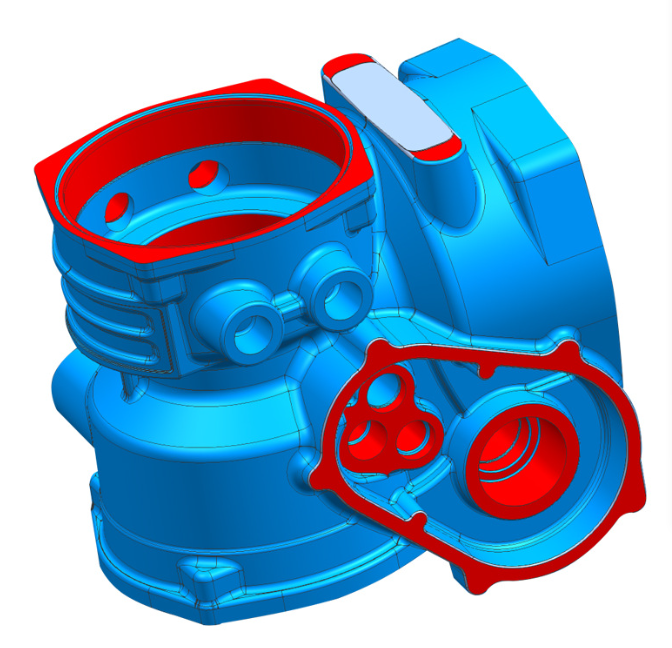
- CFD Simulation Application: Computational fluid dynamics (CFD) simulation is a powerful tool for optimizing the injection mold cooling system. It can accurately predict the
flow and heat transfer of the cooling medium within the channels and the heat dissipation from the mold cavity. By analyzing the simulation results, designers can make informed
adjustments to the cooling channel layout, diameter, and flow rate. For example, if the simulation reveal
Send your 2D/3D files and get a detailed quotation within 24 hours — DFM feedback, material and tolerance advice, and lead time included. Prototypes from 1 piece, no minimum order.
Request a Free Quote → WhatsApp Us
Or email jasonhardware@foxmail.com · Reply within 24 hours, Monday–Saturday
Contact: Mr Zhang
Phone: +86-18368240367
E-mail: jasonhardware@foxmail.com
Add: No.16 Laoshan Road, Beilun District, Ningbo City
LiveChatclose
 Send Email
 WhatsApp