






jasonhardware@foxmail.com+86-0574-58202256
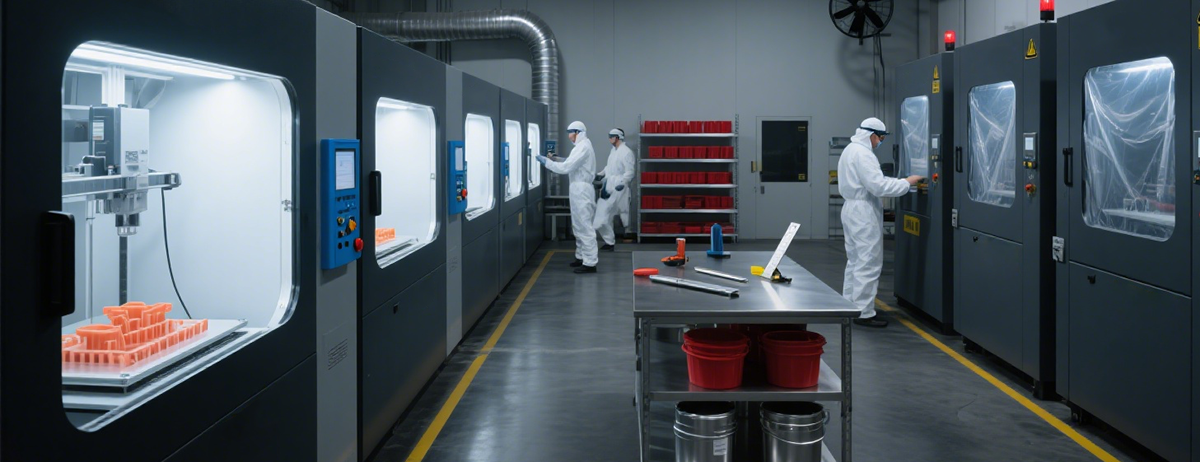
 The process of manufacturing prototyping parts on demand, piece by piece, and in a personalized manner through 3D printing SLS and SLA service based on the 3D drawings or creative designs provided by customers.
Prototyping and small batch production, and high flexibility, and widely used in industry, medicine, art, education and other fields.
Clients submit design drawings, such as STL, IGS, STEP, OBJ and other file formats; and provide detailed requirements such as size, color, surface treatment requirements, etc.
Renjiu professional engineers evaluate the printability of the model and determine the appropriate printing technology and materials.
Renjiu can use suitable technologies such as SLA and SLS for printing, and accurately control the operating temperature, humidity, and exposure time of the equipment; Renjiu support simultaneous multi-piece parallel printing to improve efficiency.
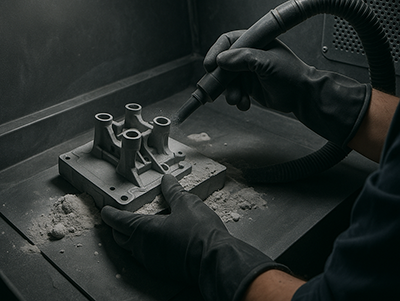
Professionals will remove the support structure and use special cleaning agents for surface cleaning.
Grinding, polishing, painting, coloring, silk screen printing, UV coating, etc.
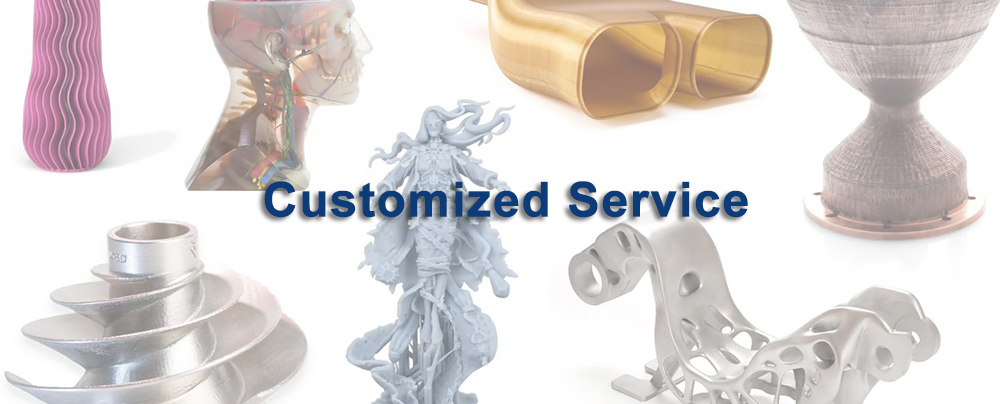
Composite resin materials can be developed according to product characteristics, such as flame retardant, flexible, high hardness, and impact-resistant materials.
Assist customers to optimize design models, adjust wall thickness, chamfers, and hole structures, and improve printing success rate and strength.
Special surface processing can be performed, such as sandblasting, electroplating, UV, painting, silk screen printing, etc., to improve appearance and durability.
Brand logos can be reserved or laser engraved on the structure to meet brand identification and traceability management.
We run three additive processes, and the choice between them is driven by what the part has to do — not by which one is cheapest. Each has a distinct accuracy, surface and material profile.
| SLA (resin) | SLS (nylon powder) | FDM (filament) | |
|---|---|---|---|
| Tolerance | ±0.1 mm | ±0.1 mm | ±0.2 mm |
| Surface | Smooth, fine detail | Even, granular | Visible layer lines |
| Strength | Rigid, brittle | Strong, functional | Moderate, layer-weak |
| Min. feature | ~0.2 mm | ~0.5 mm | ~0.5 mm |
| Best for | Visual models, fit checks | Functional prototypes, small batches | Large simple parts, jigs |
For material selection within each process, see our 3D printing materials page.
Additive parts are never as accurate as machined ones, and it pays to design around that. A practical summary:
For fit, form and light functional duty, yes. For tight tolerances, real service loads or a specific engineering material, machining remains the better choice.
Expect roughly ±0.1 mm for SLA and SLS on well-designed features. Very small holes and thin walls are the first features to drift.
Yes — support removal, sanding, priming, painting, dyeing and light machining of critical features are all available as follow-on operations.
STEP or STL for geometry, plus a 2D drawing where any dimension is critical. Where only a drawing exists, we can model the part first.
Send a STEP file and tell us what the part must do — we will recommend printing or machining based on the application, not on which machine is idle. Get a quote.
LiveChatclose
 Send Email
 WhatsApp