






jasonhardware@foxmail.com+86-0574-58202256
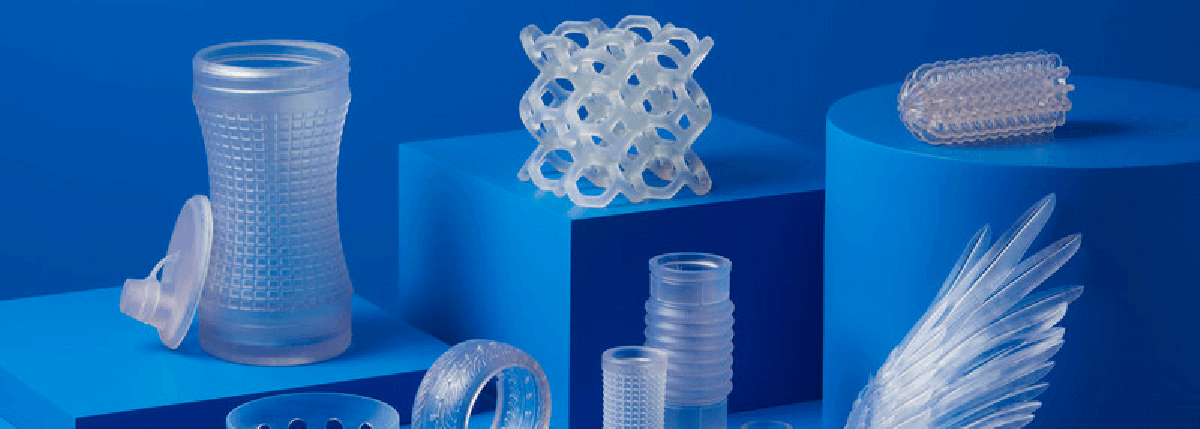
| Picture | Material | Details | Service |
 | Resin | A solid or highly viscous liquid that can be converted into a polymer | 3D Printing |
 | ABS | The opaque thermoplastic, it is an amorphous polymer comprised of three monome | 3D Printing |
 | PC | Strong, tough materials, and some grades are optically transparent. | 3D Printing |
 | Nylon | Excellent abrasion resistance, high impact strength and good mechanical properties. | 3D Printing |
 | TPU | High mechanical strength and rigidity. POM material has very good sliding properties, excellent wear resistance and low moisture absorption. | 3D Printing |
 | Stainless Steel | Being hydrophobic, non-wetting, high density and resistant to high temperatures, PTFE is an incredibly versatile material with non-stick properties. | 3D Printing |
 | Aluminum | It is available in different crystalline structures, referred to as HDPE, LDPE, and LLDPE. | 3D Printing |
The material you can print is decided before you choose the part — it is decided by the process. Each of the three common additive technologies has its own material family and its own set of trade-offs.
| Process | Materials | Detail / surface | Best for |
|---|---|---|---|
| SLA (resin) | Photopolymer resins, clear, tough and castable grades | Very fine detail, smooth surface | Visual models, fit checks, patterns for casting |
| SLS (powder) | Nylon PA12, PA11, glass-filled nylon | Matt, granular finish, strong and functional | Working prototypes, snap fits, small-batch functional parts |
| FDM (filament) | PLA, ABS, PETG, TPU, PC, filled filaments | Visible layer lines | Large simple shapes, jigs, low-cost concept models |
Once the process is fixed, the material question is usually about the service conditions:
3D printing and CNC machining are complementary, not competing. The fastest route to a working part is often a combination:
For the same material, a machined part is stronger and more consistent because the material is solid and isotropic. Printed parts win on geometry, not on strength.
Yes — SLS nylon brackets, covers and ducting are routinely used in production, especially in low volumes and in machines where weight and complexity matter more than ultimate strength.
A solid STEP or STL file is ideal, along with a 2D drawing for any critical dimensions. Where only a drawing exists, our engineers can model the part first.
Yes. Printing first for fit, then machining a final version from metal or engineering plastic, is a common and cost-effective development route.
Send a STEP file and we will tell you honestly whether printing or machining gives you the better part for the money. Request a quote.
LiveChatclose
 Send Email
 WhatsApp