






jasonhardware@foxmail.com+86-0574-58202256
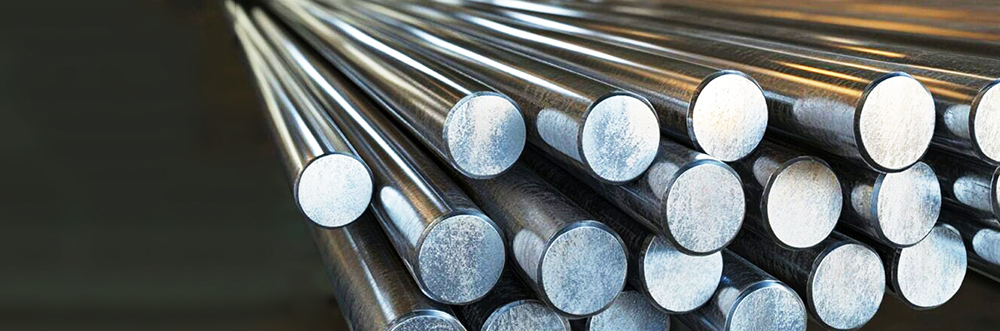
| Pictures | Materials | Details | |
 | Aluminum | Aluminum 6061 | Our aluminum alloy. With good strength-to-weight ratio, excellent machinability and natural corrosion resistance. |
Aluminum 7075 | The aerospace-grade material with excellent strength-to-weight ratio and high strength and hardness. | ||
Aluminum 5052 | The strain hardening aluminum alloy with excellent corrosion resistance. Suitable for marine applications. Can be welded. | ||
 | Stainless Steel | Stainless steel 304 | The most common stainless steel. It is non-magnetic steel. |
Stainless steel 316/316L | SS316 has superior corrosion resistance in chloride containing environments, with good elevated temperature strength. | ||
Stainless steel 303 | SS303 has excellent toughness, but lower corrosion resistance than 304 | ||
Stainless steel 430 | SS430 is a non-hardenable steel containing straight chromium, and belongs to the ferritic group of steels. | ||
Stainless steel 201 | High density, with certain acid and alkali resistance, no bubbles, no pinholes. | ||
 | Brass | Brass C360 | Good tensile strength and natural corrosion resistance, ideal for parts with low friction. |
 | Copper | Copper | Good electrical conductivity, thermal conductivity, ductility, deep drawing and corrosion resistance. |
 | Titanium | Titanium | lightweight, high-strength, low-corrosion structural metal and is used in alloy form for parts in high-speed aircraft. |
 | Mild steel | Mild steel 1018 | Good machinability, weldability, toughness, strength, but it’s susceptible to corrosion on the surface. |
| Mild steel 1045 | Medium tensile carbon steel with good strength and impact properties. | ||
| Mild steel A36 | The most commonly used mild and hot-rolled steel. | ||
 | Alloy steel | Alloy stee 4140 | The heat treatable and low alloy steel containing chromium, nickel and molybdenum. |
Alloy steel 4340 | heat treatable and low alloy steel containing chromium, nickel and molybdenum. | ||
 | Spring steel | Spring steel | Is used prominently in automotive and industrial suspension applications. |
The table above lists what we stock and machine every week. Choosing between those grades comes down to five questions, and answering them honestly usually narrows the list to one or two candidates.
Machinability is a relative number, not a fixed property — it depends on the tool, the speed and the setup. As a practical ranking for turning and milling on standard carbide tooling:
| Grade | Machinability | Where it earns its place |
|---|---|---|
| Aluminium 6061-T6 | Excellent | The default for prototypes, housings and fixtures |
| Brass C360 | Excellent | Fittings, connectors, small turned parts |
| Aluminium 7075-T6 | Good | High-strength, weight-critical components |
| Steel 1045 / 1018 | Good | Shafts, bushings, general engineering parts |
| Stainless 303 | Good | Screw-machine parts needing corrosion resistance |
| Stainless 304 / 316 | Moderate | Food, medical and marine hardware |
| Titanium Grade 5 (Ti-6Al-4V) | Difficult | Aerospace and medical, where nothing else will do |
A "moderate" rating does not mean a part is unmakeable — it means slower cutting speeds, more tool wear and a higher price. That is worth knowing before the quote arrives.
The tolerance you can hold depends as much on the material as on the machine. Stiff, stable metals hold tight numbers easily; soft or gummy ones move under clamping and cutting forces.
| Material family | Routine tolerance | Precision tolerance |
|---|---|---|
| Aluminium alloys | ±0.05 mm | ±0.01 mm |
| Brass and copper | ±0.05 mm | ±0.01 mm |
| Carbon steel | ±0.05 mm | ±0.01 mm |
| Stainless steel | ±0.05 mm | ±0.02 mm |
| Titanium | ±0.05 mm | ±0.02 mm |
For numeric guidance on a specific alloy, see our aluminium tolerances guide, which explains ISO 2768 limits and how tightening a tolerance affects price.
Aluminium 7075-T6 offers the best strength-to-weight ratio of the common alloys. Where corrosion resistance matters more than peak strength, 6061-T6 is usually the better balance of price, finish quality and availability.
Only when you genuinely need corrosion resistance, hygiene or elevated-temperature strength. For a dry indoor bracket, painted carbon steel does the same job for less.
We buy from certified Chinese mills and can supply mill certificates on request. If you have an approved grade or a customer-specified source, we will machine material you supply — just confirm it is cut to a workable size.
Yes. Both are routine work for us, though they carry longer lead times and higher prices because of slower cutting speeds and faster tool wear.
Not sure which grade suits your application? Send us the drawing and the operating conditions — our engineers will recommend a material that meets the requirement without over-specifying the price.
LiveChatclose
 Send Email
 WhatsApp