






jasonhardware@foxmail.com+86-0574-58202256
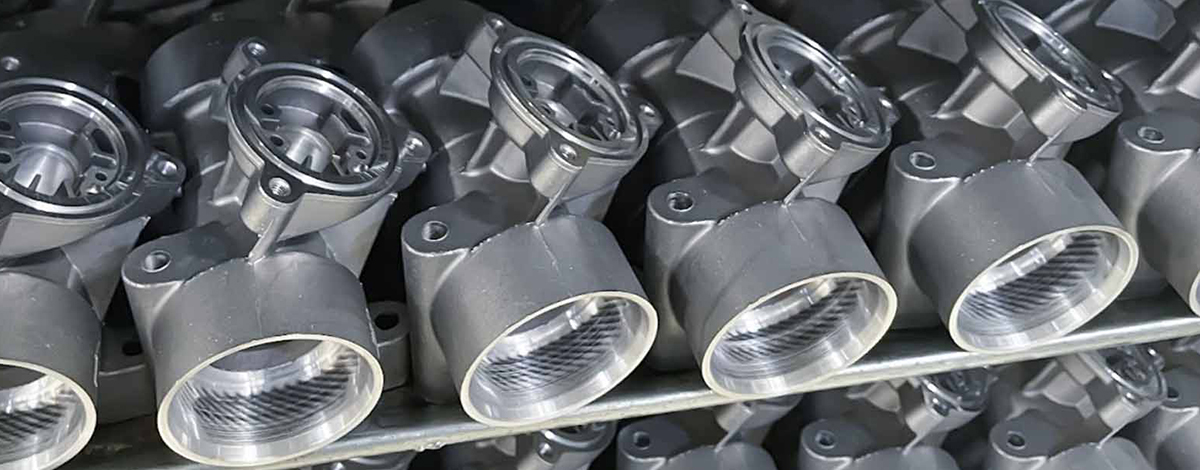
| Pictures | Materials | Details | |
 | Aluminum Alloys | ADC12 | Our aluminum alloy. With good strength-to-weight ratio, excellent machinability and natural corrosion resistance. |
A380 | The aerospace-grade material with excellent strength-to-weight ratio and high strength and hardness. | ||
| A356 | The strain hardening aluminum alloy with excellent corrosion resistance. Suitable for marine applications. Can be welded. | ||
 | Zinc Alloys | Zamak 3 | The most common stainless steel. It is non-magnetic steel. |
| Zamak 5 | SS316 has superior corrosion resistance in chloride containing environments, with good elevated temperature strength. | ||
| ZL0410 | SS303 has excellent toughness, but lower corrosion resistance than 304 | ||
| ZL0430 | SS430 is a non-hardenable steel containing straight chromium, and belongs to the ferritic group of steels. | ||
Almost every die-cast part falls into one of three alloy families. Each has a different balance of strength, weight, corrosion resistance and cost.
| Alloy | Family | Key properties | Typical use |
|---|---|---|---|
| ADC12 | Aluminium | Excellent fluidity, good strength, easy to cast | General housings, covers, brackets |
| A380 | Aluminium | Balanced strength and castability, widely available | Electronics enclosures, automotive parts |
| A356 | Aluminium | Higher strength and ductility, heat-treatable | Structural and pressure-tight parts |
| Zamak 3 | Zinc | Very thin walls, tight tolerance, easy plating | Small precision and decorative parts |
| AZ91D | Magnesium | Lightest, good strength-to-weight | Weight-critical housings |
The table above lists what we cast most often. Where a drawing calls for a specific grade, we work to that specification rather than substituting a convenient alloy.
Porosity — internal gas or shrinkage voids — is the defining quality issue in die casting. It affects pressure tightness, machined surface appearance and fatigue life. It cannot be eliminated entirely, but it can be managed:
The two processes are usually partners rather than rivals. Die casting produces a near-net shape cheaply at volume; CNC machining then cuts the critical faces, bores and threads to tolerance. The standard workflow is cast, then machine — the casting removes most of the material cost and the machining delivers the precision.
For low volumes, machining from solid is often the better choice because it avoids tooling. The crossover is driven by volume, part size and the amount of finish machining required.
Generally no — cast alloys are less ductile than their wrought equivalents. Where peak strength is needed, a machined wrought part is better; where complex near-net geometry at volume matters, casting wins.
They can, but cast aluminium takes anodising less evenly than wrought material because of its silicon content and porosity. Powder coating and painting give more consistent results on castings.
Die casting becomes economical once tooling cost is spread over volume; below that threshold, machining or sand casting is usually the sensible route.
A general casting tolerance is measured in fractions of a millimetre. Tight tolerances are achieved by machining the critical features after casting, not by the casting process itself.
Not sure whether to cast or machine your part? Send the drawing and the annual volume — we will tell you where the cost crossover sits.
LiveChatclose
 Send Email
 WhatsApp