






jasonhardware@foxmail.com+86-0574-58202256
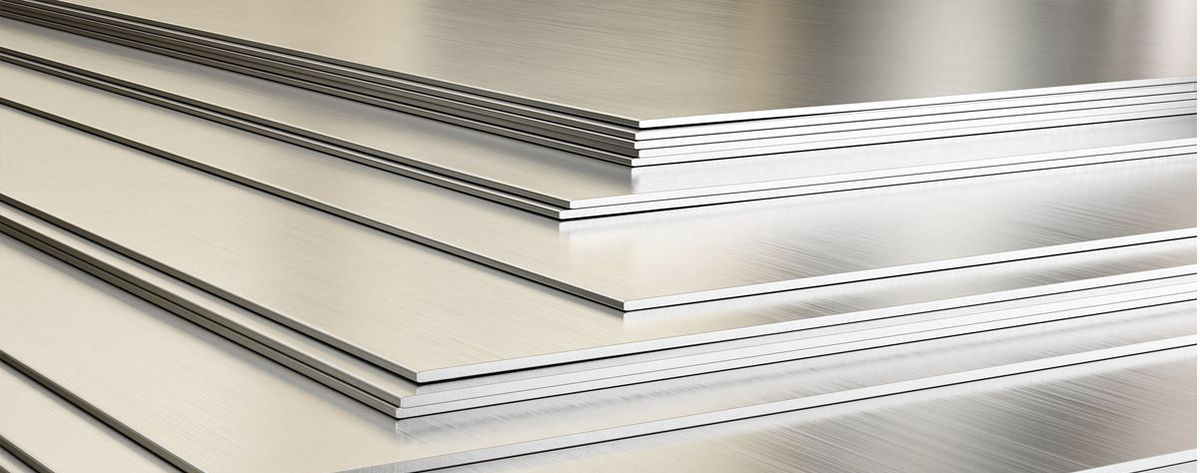
| Pictures | Materials | Details | |
 | Aluminum | Aluminum 6061 | Our aluminum alloy. With good strength-to-weight ratio, excellent machinability and natural corrosion resistance. |
Aluminum 5052 | The strain hardening aluminum alloy with excellent corrosion resistance. Suitable for marine applications. Can be welded. | ||
 | Stainless Steel | Stainless steel 304 | The most common stainless steel. It is non-magnetic steel. |
Stainless steel 316/316L | SS316 has superior corrosion resistance in chloride containing environments, with good elevated temperature strength. | ||
Stainless steel 301 | SS303 has excellent toughness, but lower corrosion resistance than 304 | ||
Stainless steel 201 | High density, with certain acid and alkali resistance, no bubbles, no pinholes. | ||
 | Copper | Copper | Good electrical conductivity, thermal conductivity, ductility, deep drawing and corrosion resistance. |
 | Mild steel | Mild stee 1018 | Good machinability, weldability, toughness, strength, but it's susceptible to corrosion on the surface. |
Sheet metal selection is driven by three things: what the part must survive, how it will be formed, and how it will be finished. The grade you pick determines all three.
Bending is where most sheet metal problems begin. The inner bend radius must be large enough for the material to stretch without cracking, and the minimum radius scales with thickness.
| Material | Typical thickness | Minimum bend radius | Notes |
|---|---|---|---|
| Cold-rolled steel (SPCC) | 0.5–3.0 mm | ≈ 1 × thickness | Cheap and strong; must be painted |
| Galvanised steel (SGCC) | 0.5–3.0 mm | ≈ 1 × thickness | Zinc coating resists corrosion |
| Stainless 304 | 0.5–3.0 mm | ≈ 1 × thickness | Harder to form; springs back |
| Aluminium 5052 | 0.8–4.0 mm | ≈ 1 × thickness | Excellent formability and corrosion resistance |
| Aluminium 6061 | 0.8–4.0 mm | ≈ 2–3 × thickness | Stronger but cracks on tight bends |
Springback is a related issue: metal springs back slightly after the punch releases, so we over-bend to compensate. Harder materials spring back more, which is why stainless and 6061 need more allowance than mild steel.
Finishing is chosen with the material, not after it. Powder coating gives a durable, thick, coloured finish on steel and aluminium. Anodising suits aluminium and preserves a metallic look. Zinc plating and passivation protect steel and stainless respectively. Brushing and bead blasting set the texture that the final finish sits on.
A safe starting rule is one times the material thickness for mild steel and 5052 aluminium, and up to three times for 6061 aluminium. We will confirm the exact figure against your grade and temper.
Yes. One-off brackets and enclosures are routine, produced by laser cutting and press-brake forming without the tooling cost of stamping.
Once volumes are high enough to amortise a hard tool — typically thousands of identical parts. Below that, cutting and forming is faster and cheaper overall.
Yes, we generate the flat pattern and bend sequence from your 3D model so that the finished part matches the drawing after forming.
Have a bracket or an enclosure to build? Send the drawing and we will advise on grade, thickness and bend radii before quoting.
LiveChatclose
 Send Email
 WhatsApp