






jasonhardware@foxmail.com+86-0574-58202256
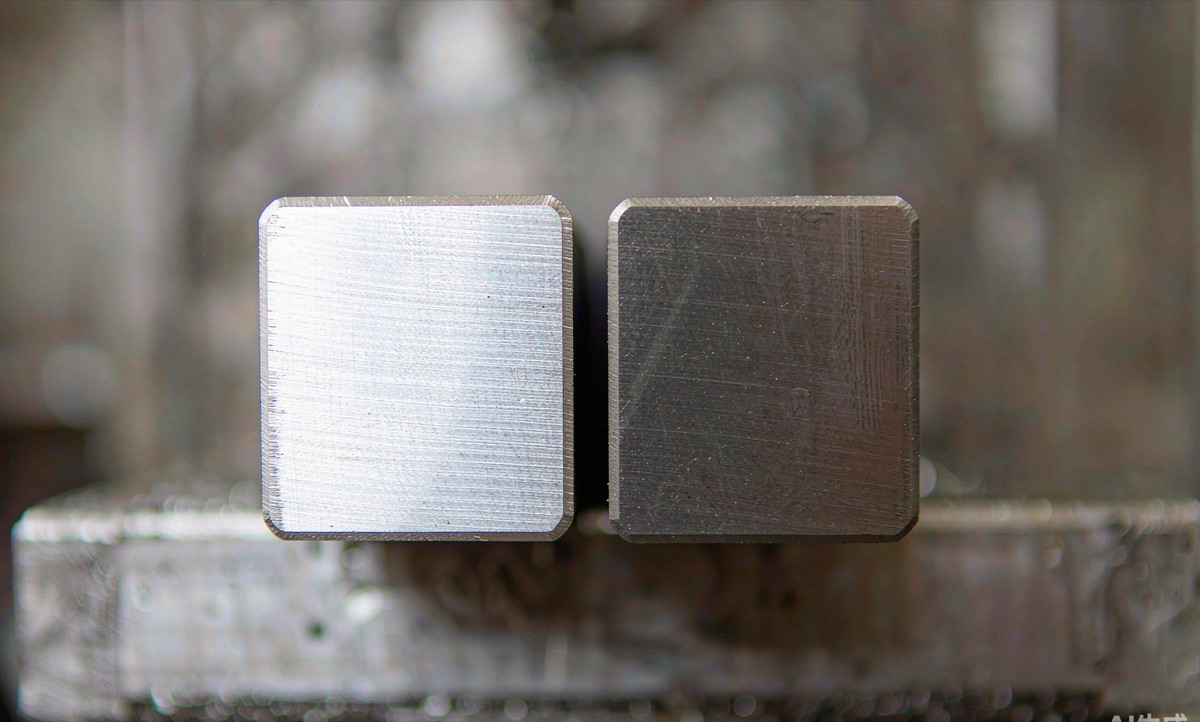
Aluminium 6061 and 7075 are the two grades that dominate custom machining, and drawings arrive specifying the wrong one surprisingly often. They are both aluminium, both widely stocked, both easy to anodise — and in practice they behave like different materials entirely. This comparison tells you which one belongs on your drawing, and why the answer is usually 6061.
7075 is stronger; 6061 is better at almost everything else. 7075-T6 delivers roughly double the tensile strength of 6061-T6, which is why it is the aerospace and performance-grade alloy. 6061 answers back with better corrosion resistance, easier welding, lower cost and wider availability — which is why it is the default choice for everything that is not flying.
| Property | 6061-T6 | 7075-T6 |
|---|---|---|
| Tensile strength | ≈ 310 MPa | ≈ 570 MPa |
| Yield strength | ≈ 270 MPa | ≈ 500 MPa |
| Machinability | Excellent — clean chips, fine finish | Good — slightly more abrasive, still fine |
| Corrosion resistance | Good in most environments | Poorer — susceptible to stress corrosion; often clad or coated |
| Weldability | Good (loses some strength in the zone) | Poor — generally not welded |
| Anodising | Even, predictable results | Works, but colour can vary more |
| Relative material cost | Baseline | Roughly 1.5–2× more expensive |
| Availability | Plate, bar, tube — everywhere | Plate and bar — good but less universal |
| Typical uses | Housings, brackets, fixtures, enclosures | Aircraft fittings, high-strength links, tooling plates |
For tolerance capability on these alloys, our aluminium tolerances guide covers ISO 2768 limits and the cost of tightening them.
Both machine beautifully by metal standards, with small differences worth knowing. 7075's higher hardness gives excellent edge finish and very fine turned surfaces but wears tooling slightly faster. 6061 cuts fast and clean, tends to build up edge on worn tools, and produces the best anodised cosmetic finish of the common alloys. Both hold routine tolerances of ±0.05 mm and precision work to ±0.01 mm without difficulty — material choice changes the strength of the part far more than its machinability.
No. It is worth it when strength-to-weight or fatigue performance is the binding constraint. For the majority of machined parts, 6061 passes the calculation and costs less.
Yes, though results are less uniform than on 6061 because of the alloy's copper and zinc content. For colour-critical parts we recommend 6061 or a sample approval first.
6061 generally allows higher material removal rates. The difference is real but modest — the larger cost difference is in the raw material itself.
Yes — both are standard stock items in plate and bar, and we supply material certificates on request. See the full range on our metal materials page.
Not sure which grade your part needs? Send the drawing and the loads — we will check the calculation and tell you if a cheaper alloy will do the job.
Send your 2D/3D files and get a detailed quotation within 24 hours — DFM feedback, material and tolerance advice, and lead time included. Prototypes from 1 piece, no minimum order.
Request a Free Quote → WhatsApp Us
Or email jasonhardware@foxmail.com · Reply within 24 hours, Monday–Saturday
Contact: Mr Zhang
Phone: +86-18368240367
E-mail: jasonhardware@foxmail.com
Add: No.16 Laoshan Road, Beilun District, Ningbo City
LiveChatclose
 Send Email
 WhatsApp