How to Get an Accurate CNC Machining Quote: The RFQ Checklist
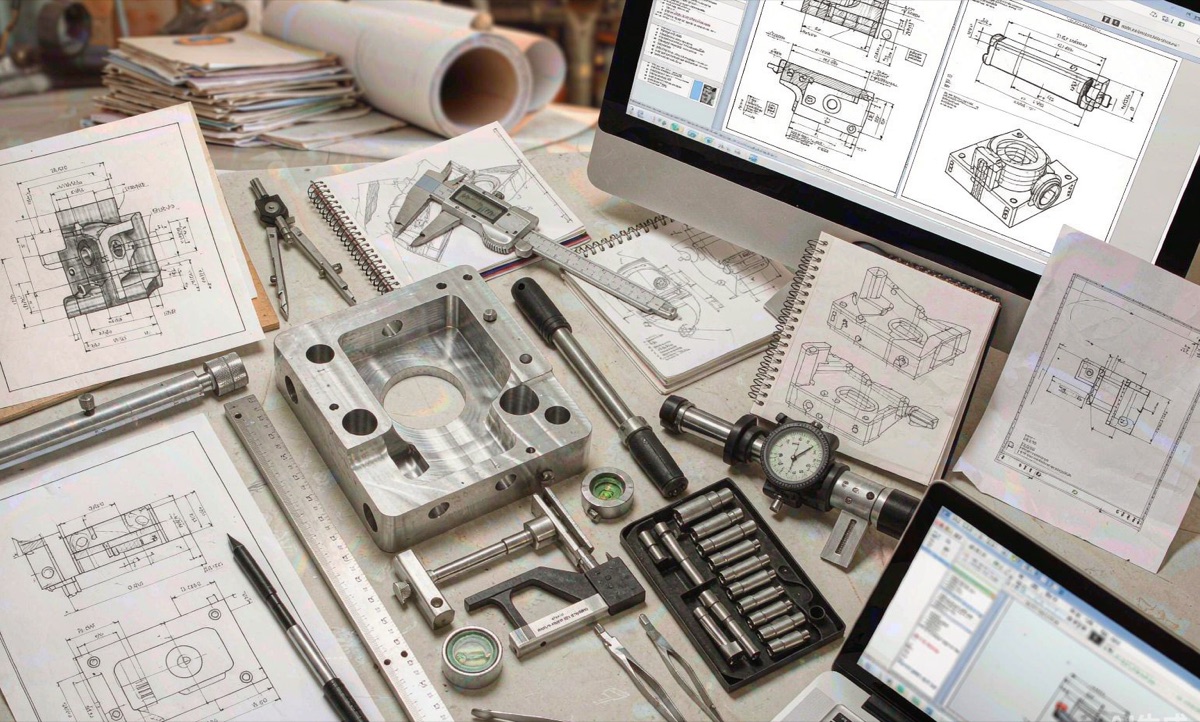
A surprising share of machining delays do not happen on the machine — they happen in the quotation stage. An RFQ that leaves out one critical detail comes back with a price based on assumptions, and the price changes the moment the truth comes out. This checklist is what a supplier actually needs to quote your part accurately, first time.
The Six Things Every RFQ Needs
- A 2D drawing with tolerances. The drawing is the contract. It states dimensions, tolerances, material, finish and inspection requirements in a form both sides can point to later. A 3D model alone cannot carry tolerance information reliably.
- A 3D model (STEP preferred). The model lets the supplier plan real toolpaths and spot problems a flat drawing hides — deep pockets, inaccessible features, wall thickness. STEP format preserves geometry exactly; exports with converted surfaces cause quoting errors.
- Material and condition. "Aluminium" is not an answer. 6061-T6 and 7075-T6 machine differently, anodise differently and cost differently. If you are open to alternatives, say what the part must survive and ask for a recommendation.
- Quantity — now and annually. A price for 10 pieces and a price for 1,000 are different manufacturing routes. Quoting the annual volume alongside the first order lets the supplier propose the right process, and often unlocks a better unit price.
- Finish specification. Anodising, plating, coating, blasting — each adds cost and lead time, and some affect dimensions. Say which faces are cosmetic and which are functional.
- Deadline and delivery terms. When you need it, and where it is going. Expedited work is possible; impossible deadlines quoted as possible help nobody.
Details That Prevent Surprises Later
Beyond the basics, these items separate a smooth project from a painful one:
- Thread callouts with standard and depth — "M5" alone is ambiguous about depth and engagement.
- Which faces are critical. Mark the datums and the features that matter most; a supplier who knows the function protects the right dimensions.
- Inspection expectations. Do you need a dimensional report, a material certificate, a first article? Ask in the RFQ, not after delivery.
- Packing requirements. Delicate cosmetic parts need individual wrapping or trays. Cheap packing is the most common cause of damaged "perfect" parts.
- Existing standards. If your company has a general tolerance standard (ISO 2768, ASME Y14.5), reference it instead of annotating every dimension.
What Makes a Quote More Expensive Than Expected
When a quotation comes back higher than the target price, one of these is usually the reason — and most are fixable at the design stage:
- Tighter tolerances than the function needs. Every digit after the comma costs machine time. Read our breakdown of what actually drives machining cost.
- Deep, narrow internal pockets that force long, fragile tools and slow feeds.
- Very thin walls that chatter, distort and need slow finishing passes.
- Non-standard threads or radii that require special tooling.
- Finishes applied to faces that nobody sees. Cosmetic preparation is real labour.
- Quantities quoted without alternatives — sometimes 500 machined parts cost less per unit as 500 cast parts, and nobody asked.
How to Compare Quotes Between Suppliers
A low number is only meaningful if it is pricing the same thing. Before comparing, check that every quote assumes the same material grade, the same tolerances, the same finish, the same inspection scope and the same terms. The cheapest quote is frequently cheap because something was left out — and it reappears on the invoice as a surcharge, or worse, on the part as a defect. Our guide to vetting a machining supplier covers the wider evaluation.
Benchmarks help too: our breakdown of CNC machining hourly rates shows what $40, $60 and $90 per hour actually buy, so you can judge whether the machine-time line in a quote is realistic before you challenge it.
A Minimal RFQ Template
- Part name and drawing number
- 2D drawing (PDF) + 3D model (STEP)
- Material and condition
- Quantity: first order / annual forecast
- Finish (process, colour, which faces)
- Inspection requirements (first article / full report / certificates)
- Required delivery date and destination
That is the whole list. A complete RFQ of this size takes ten minutes to assemble and saves days of back-and-forth.
Frequently Asked Questions
How fast should a quotation come back?
Simple parts within 24–48 hours; complex assemblies or casting/moulding routes take longer because they need engineering review. A quote that returns instantly for a complex part is usually a guess.
Should I send one drawing to several suppliers?
Yes — competitive quotes are healthy. Just make sure each supplier is quoting the same specification, and weigh responsiveness and engineering feedback alongside the number.
Do you sign NDAs before receiving drawings?
Yes. Send the NDA first or ask for ours; drawings are reviewed internally and never shared outside the company.
Can you quote from a sample part instead of a drawing?
Often yes — we can measure the sample and produce a drawing first, then quote production. This works well for legacy parts with no documentation.
Related Reading
Ready for a quote that holds? Send your RFQ with the checklist above and we will return a firm price with a recommended route.
Need this part made to your drawing?
Send your 2D/3D files and get a detailed quotation within 24 hours — DFM feedback, material and tolerance advice, and lead time included. Prototypes from 1 piece, no minimum order.
- ISO 9001 quality system · full inspection report with every shipment
- CNC machining, injection molding, die casting & sheet metal under one roof
- NDA available on request — your drawings are never shared
Request a Free Quote →
WhatsApp Us
Or email jasonhardware@foxmail.com · Reply within 24 hours, Monday–Saturday









 Send Email
 WhatsApp