






jasonhardware@foxmail.com+86-0574-58202256
A buyer sends the same drawing to two shops for 10 parts. Shop A quotes $86 per part. Shop B quotes $19 per part. Same material, same tolerance callouts, same week of delivery. Before assuming one of them made a mistake, ask a different question: how much of each quote is setup? On a 10-piece order, setup routinely decides the price — and the same two shops quoting 500 pieces can land within 10% of each other. That is the whole story of CNC setup cost, and it is the single most misunderstood line on a machining quotation.
At Ningbo Renjiu Machinery we quote high-mix, low-volume work every day — which means setup is a line item we think about more than almost anything else. This guide walks through what a setup actually involves, why it costs what it costs, exactly how it amortises across quantity, and the levers a buyer can pull to shrink it — with worked numbers you can check against your own quotes.
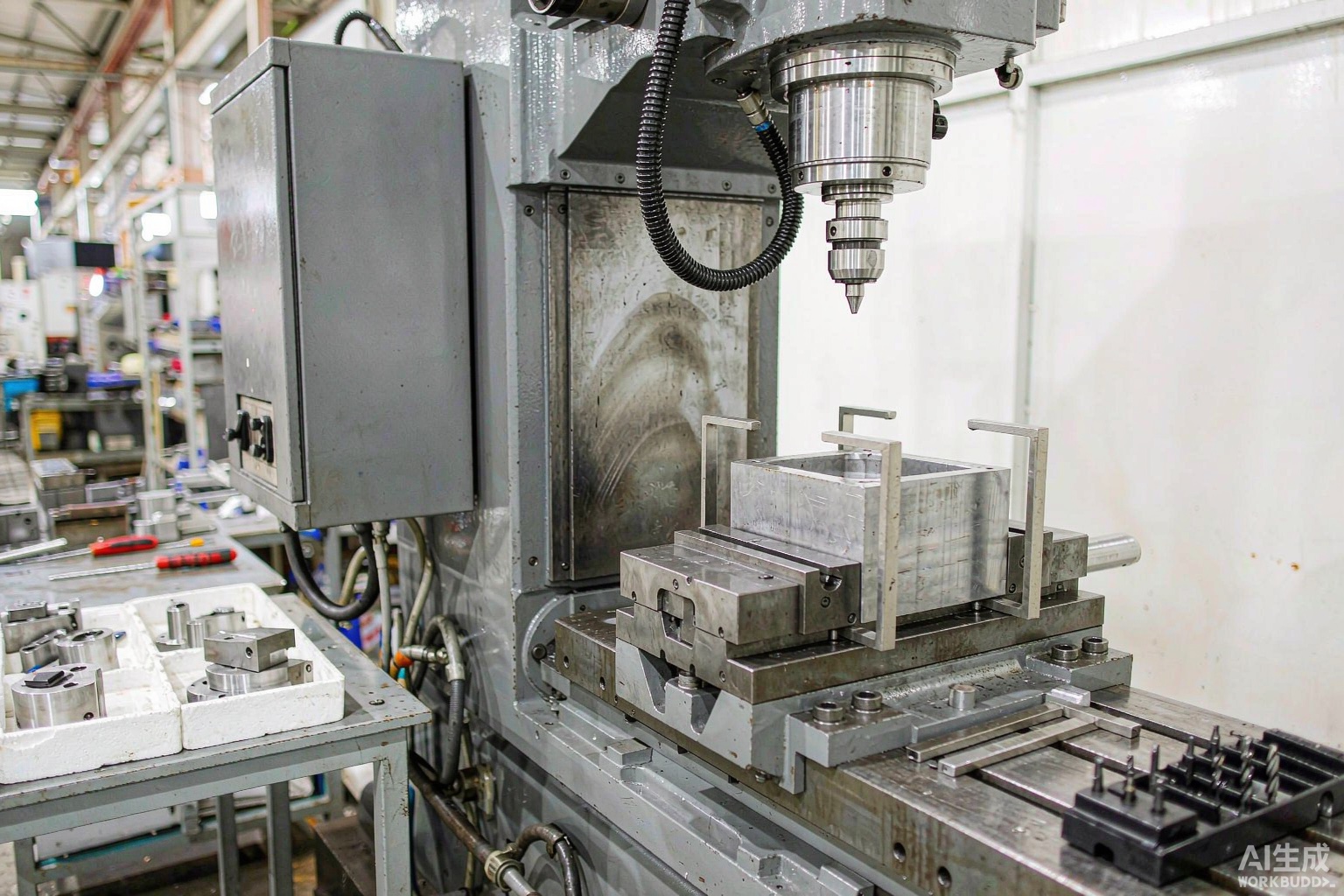
To a machinist, a setup is not "putting the part in the machine." It is everything that happens between the last part of the previous job and the first good part of this one:
On a straightforward 3-axis part in a standard vise, a well-organised shop does all of this in 45–90 minutes. On a 5-axis impeller with custom fixtures and 15 tools, a setup can take 4–8 hours. A part that must be flipped to machine a second face means two setups; a housing with features on four faces can mean three or four. Every additional setup repeats the full cost.
Setup is billed as time × rate, but the time is only part of it. A complete setup charge usually bundles:
| Component | Typical time / cost | Notes |
|---|---|---|
| Machine downtime during setup | 45 min – 8 hr × machine rate | The machine earns nothing while it is being set. At a $45/hr 3-axis rate, 1.5 hr = $67.50 before a single chip is cut. |
| Programming (CAM) | 1 – 6 hr, $40–70/hr | One-time per part, but it must be recovered on the first order. Reorders reuse it. |
| Fixture / soft jaws | $30 – $500+ | Machined soft jaws: ~$40–80. A dedicated milling fixture for a complex housing: $200–600 in labour and material. |
| First-off inspection | 0.5 – 2 hr CMM time | Full dimensional report on the first piece; more if the customer requires a documented FAI (AS9102). |
| Scrap / setting allowance | Often the first 1–2 parts | Program proving on complex parts frequently consumes material before dimensions stabilise. |
Adding this up, a modest 3-axis part typically carries a $150–300 total setup package (setup time + programming + fixture + first-off). A complex 4- or 5-axis part routinely carries $500–1,500. Notice what is not in there: material, cutting time, finishing, freight. A quote that hides all of this inside a unit price without saying so is not cheaper — it is just less transparent.
Here is the arithmetic that makes the 10x headline real. Take a 6061-T6 aluminium sensor housing, 2 setups on a 4-axis mill:
| Cost line | Qty 1 | Qty 10 | Qty 100 | Qty 1,000 |
|---|---|---|---|---|
| Setup + programming + fixture (one-time) | $260 | $260 | $260 | $260 |
| Setup per part | $260.00 | $26.00 | $2.60 | $0.26 |
| Material | $11.50 | $11.50 | $9.80* | $8.90* |
| Machining (48 min incl. handling) | $36.00 | $36.00 | $34.20* | $32.40* |
| Finishing + inspection | $6.40 | $3.20 | $1.80 | $1.20 |
| Unit price (before margin) | $313.90 | $76.70 | $48.40 | $42.76 |
*Material and cycle time also improve slightly at volume: blanks are cut from full plates more efficiently, and proven programs run with less handling time and fewer stops.
Read the setup row again. At quantity 1, setup is 83% of the price. At quantity 100 it is 5%. That is why the same part shows a 6–8x spread between "make me one" and "make me a hundred" — and why the spread between two shops at quantity 100 is small while the spread at quantity 10 is enormous. Three conclusions follow:
Setup cost has a second life that most buyers never see on the first quote. Three months later you reorder the same housing. A shop that kept the program, the fixture and the setup sheet can be cutting chips in 20–40 minutes — the setup is a fraction of the original. A shop that purged the job can charge close to the full setup again.
This is why the cheapest first order is not always the cheapest total order. Before placing an RFQ, ask one question: "What will the reorder setup charge be?" A serious shop can answer instantly, because they archive programs, fixtures and setup sheets per part number. If the answer is vague, assume you will pay for the setup twice.
The same logic applies to split orders. Ordering 50 parts now and 50 more in three months from an archive-keeping shop costs roughly the second order's setup fraction — maybe $30–80, not $260. Ordering 50 now and 50 later from a shop that does not archive can cost the full setup package twice. Over two orders, the "expensive" quote with good engineering discipline is frequently cheaper.
Buyers control more of the setup than they think. These are the levers, roughly in order of impact:
| Lever | What you do | Typical saving |
|---|---|---|
| 1. Consolidate the batch | Combine prototypes with the first production run, or pull a small reorder forward into a larger order. | Setup spread across more parts — up to 60–80% unit saving at low quantity. |
| 2. Design for one setup | Put features on as few faces as practical; consider adding relief so both faces machine from one side. | Each eliminated setup saves the full setup cost + datum loss risk. |
| 3. Loosen tolerance where it does not matter | Keep tight tolerances only on functional faces. Every ±0.01 mm callout adds inspection and program-proving time to the setup. | 10–30% of setup and first-off time on tolerance-heavy parts. |
| 4. Standardise stock | Design to standard plate/bar thickness so blanks need no pre-machining. | Removes a whole prep operation. |
| 5. Stay with one shop | Reorders reuse archived programs, fixtures and setup sheets — the setup collapses to a fraction. | 50–90% of setup cost on repeat orders. |
| 6. Accept the shop's DFM notes | Shops flag features that force extra setups: deep pockets needing special tools, features on 5 faces, hard-to-clamp geometry. | Case-by-case, but often the largest single lever. |
Lever 2 and lever 6 are where a good supplier earns their keep. Our DFM checklist for CNC machined parts lists the 25 design decisions — including several that decide whether a part needs two setups or four — and we return these notes free with every quotation.
A transparent quotation separates setup from unit price, and states the quantity at which it applies. A clean structure looks like this:
If you receive a quote with a single undivided number, our RFQ checklist gives you the questions that reopen it — including asking for setup to be shown as its own line.
Because most of our customers order high-mix parts in small batches, setup discipline is a core part of how we quote:
Send your drawing through our free quotation page and we will return the setup line separately — with the DFM note if we see a way to delete a setup from your part.
For a simple part in a standard vise: $150–300 including programming, fixture and first-off inspection. For complex multi-setup or 5-axis parts: $500–1,500. Setup time itself runs 45–90 minutes on simple jobs and 4–8 hours on complex ones, billed at the machine's hourly rate.
Because it carries the entire setup package: the machine sits idle while fixtures and tools go in, the programmer's hours are recovered, and the first part often pays for program proving. Parts two through one hundred inherit all of that work for free.
Not in full — not if the shop archives programs and fixtures. A reorder setup (fetch archive, load fixture, verify offsets) runs 20–40 minutes, typically 10–25% of the first-order setup. Ask the question before the first order; the answer tells you how the shop treats its archives.
No — every job gets set up. You can only amortise it over more parts or reduce it through design. One-off "no setup fee" quotes simply bury the setup inside the unit price, which means you pay it again on reorder.
It replaces it with different one-time costs (build preparation, supports, post-processing) that are lower at quantity 1 but scale linearly with every part. Around 10–100+ units, machining's amortised setup usually wins on unit price for functional metal parts — see our 3D printing vs CNC machining comparison.
The first order buried setup inside the unit price; the shop is now unbundling it. Ask for both orders restated with setup shown separately — and expect the reorder setup to be a fraction of the original if the shop kept the archive.
Wondering how much of your quote is setup? Send us the drawing — we return the setup line separately and flag any design change that deletes a setup.
Send your 2D/3D files and get a detailed quotation within 24 hours — DFM feedback, material and tolerance advice, and lead time included. Prototypes from 1 piece, no minimum order.
Request a Free Quote → WhatsApp Us
Or email jasonhardware@foxmail.com · Reply within 24 hours, Monday–Saturday
Contact: Mr Zhang
Phone: +86-18368240367
E-mail: jasonhardware@foxmail.com
Add: No.16 Laoshan Road, Beilun District, Ningbo City
LiveChatclose
 Send Email
 WhatsApp