






jasonhardware@foxmail.com+86-0574-58202256
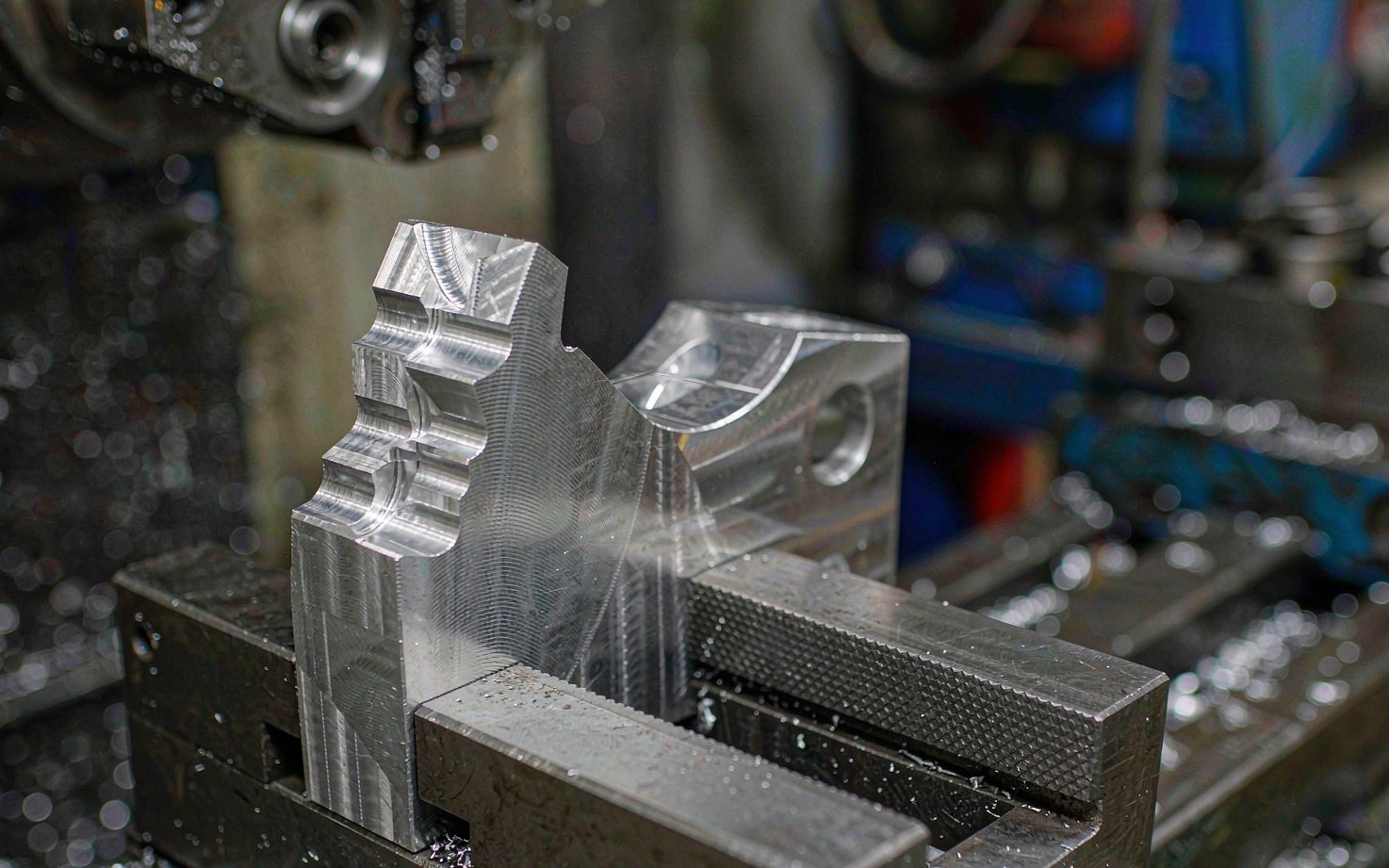
7075 is the alloy every engineer has heard of and fewer have specified correctly. With a yield strength around 503 MPa in the T6 temper — nearly double that of 6061 — it is the strongest common aluminium machining grade on the market, and it carries a price premium and a set of engineering caveats to match. Yet a large share of the drawings we see asking for 7075 do not actually need it. The strength looks impressive on paper; the question that decides whether that paper strength is worth paying for is narrower and more specific: is your part limited by yield strength, in a direction 7075 is actually strong in, in an environment it survives?
This guide is a working reference for 7075 aluminium machining decisions: what the alloy really delivers, how the T6 / T73 / T7351 tempers differ (and why the difference can decide whether your part cracks in service), what changes on the shop floor when we cut it, what the premium actually does to your piece price, and a decision framework for when to step up from 6xxx — and when not to. For the head-to-head against 6061 specifically, start with our dedicated 6061 vs 7075 comparison; this page goes deeper on 7075 alone.
7075 is an Al-Zn-Mg-Cu alloy, standardised under the Aluminium Association (ASTM B211 bar, B209 plate, AMS specifications for aerospace). The zinc-magnesium pair forms the main strengthening precipitates; copper is added to raise strength further and to make the alloy responsive to artificial ageing. That chemistry is exactly where both the performance and the problems come from:
Put simply: 7075 is a strength-first alloy. Everything else — corrosion, welding, cosmetic anodising consistency — is a trade you are making consciously or not.
Here is the comparison that should anchor every 7075 decision. Typical values for common bar and plate products:
| Property | 6061-T6 | 6082-T6 | 7075-T6 | What it means in a machined part |
|---|---|---|---|---|
| Ultimate tensile strength | ~310 MPa | ~340 MPa | ~570 MPa | 7075 carries ~65–85% more load before fracture |
| Yield strength (0.2%) | ~276 MPa | ~290 MPa | ~503 MPa | The number that matters for brackets and fittings — 7075 stays elastic under ~80% higher load |
| Hardness | ~95 HB | ~95 HB | ~150 HB | Better bruise and thread-stripping resistance; faster tool wear |
| Fatigue endurance (5×10⁸ cycles) | ~96 MPa | ~100 MPa | ~159 MPa | Real fatigue advantage — but see the "not the answer" section before crediting it |
| Elongation | ~12% | ~10% | ~11% | 7075-T6 is not brittle, but it gives less warning at ultimate load |
| Density | 2.70 g/cm³ | 2.70 g/cm³ | 2.81 g/cm³ | 7075 is ~4% heavier — usually irrelevant, occasionally decisive in aerospace |
| Corrosion resistance | Good | Good | Poor-to-fair | Needs anodising, coating or cladding in any humid or outdoor service |
| Machinability | Excellent | Excellent | Very good | Machines crisply; the issues are distortion and stress, not cutting difficulty |
Read the yield row carefully, because that is where the money is. Most machined structural parts — brackets, lugs, fittings, gearbox housings under mounting loads — are designed against yield, not ultimate strength. Against 6061, 7075 buys you roughly an 80% higher elastic load limit in the same cross-section, or equivalently, lets you shave cross-sections (and weight) while holding the same margin. In weight-critical or envelope-critical designs, that is exactly the trade you want. In a static indoor bracket, it is capacity you will never use — you are paying for numbers that never leave the datasheet.
A useful screening rule from our quoting experience: if the loads on your part are below roughly a third of 6061's yield strength (~90 MPa working stress) and the environment is benign, 7075 adds nothing but cost. Most commercial hardware sits comfortably in that range.
This is the part of 7075 specification that separates a correct drawing from a future failure investigation. The same alloy, aged differently, gives you meaningfully different strength and wildly different stress-corrosion behaviour:
| Temper | Yield strength (typ.) | SCC resistance | Fracture toughness | When to specify it |
|---|---|---|---|---|
| 7075-T6 | ~503 MPa | Poor (esp. short-transverse) | Moderate | Max strength, compression-dominated loading, thin sections, benign environment |
| 7075-T73 | ~415–435 MPa | Excellent | Good | High-strength parts under sustained tension; legacy aerospace standard for SCC-prone fittings |
| 7075-T7351 (plate) | ~415–460 MPa | Very good | Good | Thick plate machined parts where short-transverse tension exists — the pragmatic aerospace default |
| 7075-T73511 (extrusion) | ~470–505 MPa | Very good | Good | Extruded profiles needing both strength and SCC resistance |
The T73/T7351 over-ageing treatment gives up roughly 10–15% of yield strength and, in exchange, moves the alloy from "SCC-susceptible" to "SCC-resistant" — a change worth far more than 15% on any part that carries sustained tensile stress in service, especially across the plate thickness. A machined fitting cut from thick T6 plate with bolt clamping across the section is the textbook SCC scenario; the same part in T7351 is a non-issue.
Our practical specification guidance:
Cutting 7075 is not difficult — it is one of the better-machining aerospace alloys, with crisp chip formation and predictable tool wear. Three things genuinely differ from running 6xxx:
1. Cutting parameters sit between aluminium and mild steel. For a 12 mm solid-carbide 3-flute endmill:
| Parameter | 6061-T6 | 7075-T6 |
|---|---|---|
| Cutting speed (Vc) | 450–650 m/min | 300–450 m/min |
| Spindle speed (Ø12 mm) | ~12,000–17,000 rpm | ~8,000–12,000 rpm |
| Feed per tooth (fz) | 0.09–0.16 mm | 0.08–0.14 mm |
| Axial depth (roughing) | up to 1.5–2 × D | up to 1.5 × D |
| Tool life index | 100 (reference) | ~75–85 |
2. Residual stress and distortion are the real machining risk. 7075 plate carries higher internal stresses than 6061, and the alloy's higher strength resists local yielding that would otherwise relax them. Machine 60% of the material off one face of a T6 plate and the part can banana noticeably — a classic failure on thin structural plates. The countermeasures are procedural, not exotic: stress-relieved tempers (T651/T7351) as raw material, rough both sides before finishing, leave 0.5–1 mm finishing stock, unclamp and re-clamp between operations, and finish critical faces last. For flatness-critical aerospace plates this rough–relax–finish sequence is non-negotiable — our heat treatment and stress relief sequencing guide covers the full logic.
3. Tolerance holding is excellent — once the stress plan is right. In our shop, ±0.01 mm is routine on 7075 features machined in a single setup, and the alloy's stiffness (higher than 6061 by the same ~30% margin as its strength) actually helps thin-wall work hold form under clamping. The failures we see are never about the cutting; they are about parts released from their fixture before the stress balance settles, or about a final pass taken immediately after heavy roughing without a rest.
One more shop-floor note: 7075 swarf is valuable. The high zinc and copper content puts it in a premium scrap class — relevant to your supplier's economics at volume, and a small reason the material premium is not always as large as catalogue prices suggest.
7075 carries the largest raw-material premium of the common machining alloys, and it is also the alloy where buyers most often misjudge how that premium lands on the invoice. The mechanics:
| Cost element | 6061-T6 | 7075-T6/T7351 | Comment |
|---|---|---|---|
| Base material (per kg, plate, indicative) | ~$3.5–5 | ~$7–10 | 7075 roughly doubles per-kilogram cost |
| Material share of a typical machined part | ~15–30% of piece price | Machining time, setup and overhead dominate | |
| Effective piece-price impact | typically +8–20% | Heavy parts with high buy-to-fly ratios trend to the high end | |
| Stock availability (China) | Shelf stock, all thicknesses | T6 common sizes stocked; T7351 often ordered in | T7351 lead time can add 1–2 weeks |
| Machining time impact | ~0–10% slower | Lower feeds plus stress-management handling | |
The counterintuitive takeaway: a 100% material premium rarely means a 100% part-price premium. On a typical 200 g machined bracket, doubling the metal adds a few dollars; on a 20 kg aerospace plate where 80% of the stock becomes chips, it adds real money — and that is exactly the part class where 7075 is legitimately required anyway. Run your own numbers on both alloys with our free CNC machining cost calculator before assuming the premium is prohibitive — most engineers who do are surprised at how small it is on small parts.
Budget watch-outs specific to 7075:
We decline to quote "7075 required" drawings as-written more often than any other alloy, because the underlying requirement is frequently not strength. The four recurring mis-diagnoses:
| Your situation | Recommended grade | Why |
|---|---|---|
| Yield-limited bracket/lug, envelope or weight fixed | 7075-T6 (thin) / T7351 (thick plate) | The genuine use case — ~80% more elastic load capacity |
| Part flexes and you want it stiffer | 6061 + geometry change | Modulus is identical across aluminium alloys |
| Sustained tension + thick section | 7075-T7351 | SCC resistance outweighs the 10–15% strength loss |
| General commercial bracket, indoor | 6061-T6 or 6082-T6 | Premium buys unused capacity — see our 6061 vs 7075 breakdown |
| Cosmetic anodised consumer part | 6061-T6 | 7075 anodises darker and less uniformly (copper content) |
| Salt-water or marine environment | 5083 / 6082 + coating | Wrong alloy family for the environment |
| Welded structure | 6061/6082 | 7075 is not fusion-weldable |
| Weight-critical aerospace fitting, cycling loads | 7075-T7351 | Best strength-to-weight with SCC margin; pair with good fillets |
No. The raw material roughly doubles per kilogram, but material is typically only 15–30% of a machined part's cost, and cutting speeds drop only modestly. On most parts the realistic piece-price premium is 8–20%, concentrated in the material line. Run both alloys through our cost calculator to see the delta on your specific geometry.
Not always — T6 remains correct for thin sections, compression-dominated loads and benign environments, and T6 is far more available on the shelf. Choose T73/T7351 when the part carries sustained tensile stress, especially across a thick section, or when you want the stress-relief and toughness margin on flatness-critical plate work. The two tempers differ by roughly 10–15% yield strength.
Residual stress release. Machining asymmetric volumes from high-strength plate unbalances internal stresses and the part distorts when it leaves the fixture. The fixes are upstream: specify a stress-relieved temper (T651/T7351), rough both sides symmetrically, leave finishing stock, and finish critical faces last. For a worked example of the sequence, see our heat treatment sequencing guide.
Functionally yes — Type II and hard anodising both form well on 7075 and add corrosion protection the bare alloy badly needs. Cosmetically it is not 6061: the copper content tends toward a darker, sometimes yellow-grey tone with less lot-to-lot uniformity. Specular cosmetic parts stay with 6061; structural parts anodise on 7075 without drama.
Sometimes — that is its signature move. 7075-T6's ~503 MPa yield exceeds many mild and medium-carbon steels at one-third the density, so for stiffness-adequate, yield-limited parts the substitution can cut weight by half or more. Check three things first: wear surfaces (7075 is much softer than steel), operating temperature (the temper softens above ~120–150 °C), and fatigue-critical details. For cross-material comparisons beyond aluminium, see our stainless grade comparison.
At minimum, EN 10204 3.1 mill certificates with heat numbers matching the cert to the machined lot, plus temper verification. For aerospace work, AMS specifications and full traceability apply. 7075's premium makes it a substitution target for counterfeiters — certificates are your only real defence, and we provide them as standard on this alloy.
We machine 7075-T6 and T7351 weekly for aerospace, robotics and high-performance industrial customers, with stress-relieved stock, 3.1 certification, and the rough–relax–finish sequencing that keeps thick plates flat. More importantly, we will tell you honestly when 6061 or 6082 does the same job for less — the fastest way to find out is to send the drawing and the load context through our RFQ form. For an overview of our aluminium capability, temper handling and finishing options, start at our aluminium CNC machining service page, and for the other half of the selection decision, our new 6061 vs 6082 deep comparison covers the workhorse 6xxx pair in the same depth.
Send your 2D/3D files and get a detailed quotation within 24 hours — DFM feedback, material and tolerance advice, and lead time included. Prototypes from 1 piece, no minimum order.
Request a Free Quote → WhatsApp Us
Or email jasonhardware@foxmail.com · Reply within 24 hours, Monday–Saturday
Contact: Mr Zhang
Phone: +86-18368240367
E-mail: jasonhardware@foxmail.com
Add: No.16 Laoshan Road, Beilun District, Ningbo City
LiveChatclose
 Send Email
 WhatsApp