






jasonhardware@foxmail.com+86-0574-58202256
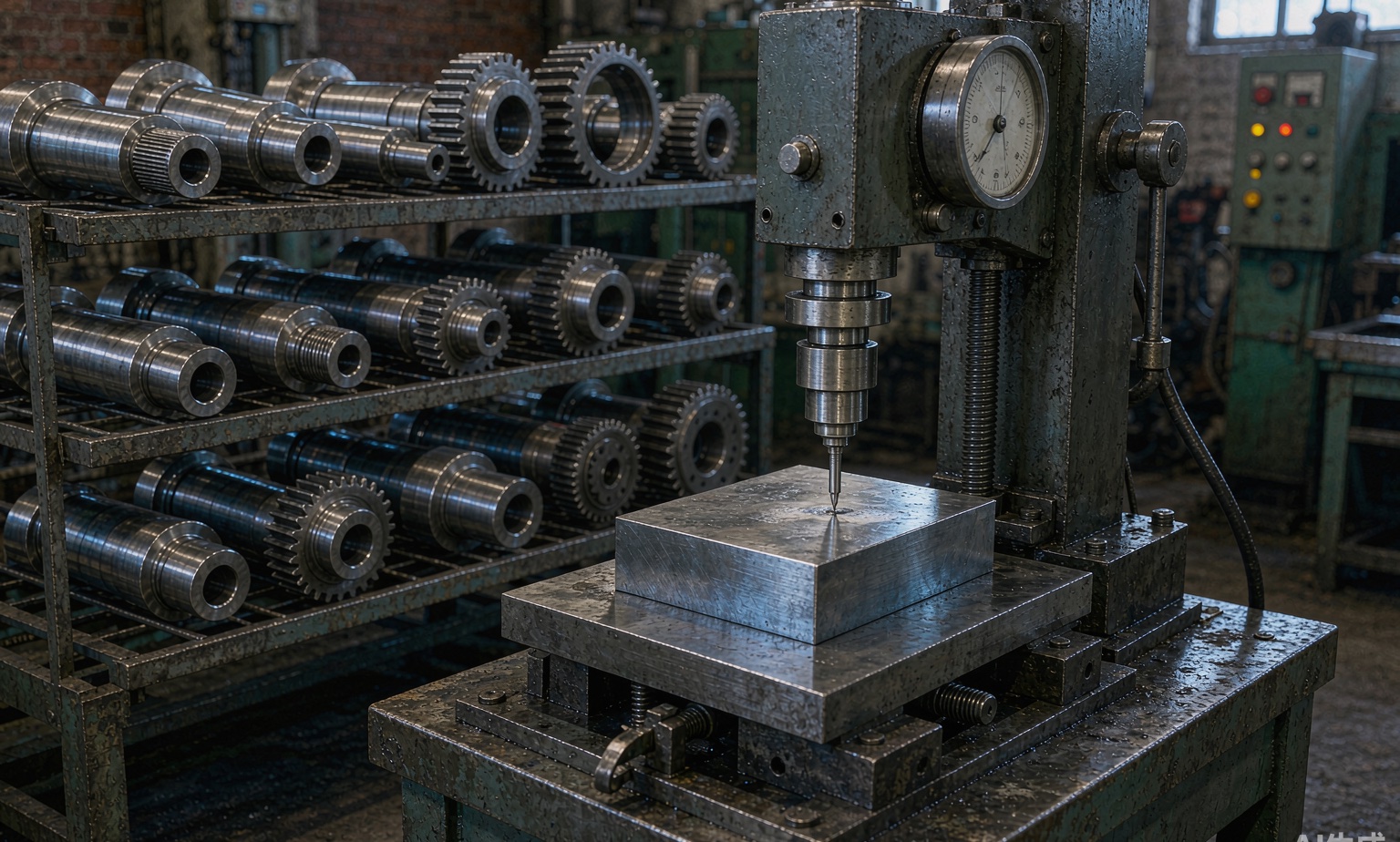
A machined part can be dimensionally perfect on delivery and still fail in service because nobody planned the heat treatment — or because it was applied at the wrong stage. Heat treatment decides hardness, strength, dimensional stability and machinability, and its position in the process chain (before or after machining) changes both the price and the final geometry. This guide covers the treatments that matter for machined steel and aluminium parts and when to specify each.
| Treatment | What it does | Typical machined use |
|---|---|---|
| Annealing / normalising | Softens steel, relieves stress, evens grain | Pre-machining: makes heavy stock removal stable and predictable |
| Quench & temper | Hardens through the section, then toughens | Through-hard parts: shafts, gears, tooling up to ~55 HRC |
| Case hardening (carburising, nitriding) | Hard shell, tough core | Wear surfaces: pins, bushings, cam followers, crank parts |
| Stress relieving | Removes machining residual stress | After roughing on distortion-prone or precision parts |
This is the decision that most often goes wrong on drawings. Three working patterns:
Through hardening gives uniform hardness but sacrifices core toughness — a fully hardened shaft snaps instead of bending. Case hardening puts 0.3–1.5 mm of hard case on a soft, tough core: carburising (then quench) reaches 58–62 HRC on the skin for gears and cam surfaces, while nitriding achieves 65–72 HRC-equivalent with zero quench distortion, at the price of shallower case and slower cycle. Choose by duty: impact loading wants case + tough core; static wear without shock can go through-hard.
Aluminium doesn't quench-harden like steel — its strength comes from precipitation. T6 temper (solution treat + artificial age) is the standard high-strength condition for 6061 and 7075, as covered in our 6061 vs 7075 guide. Two machining-specific notes: stress-relieved tempers (T651, T7351) exist precisely because mill-stock warps when you machine one side away — for parts with heavy asymmetric material removal on aluminium, buying T651 plate or doing a post-roughing stress relief is cheap insurance. And never plan on "heat treating after machining" to fix a soft stock mistake: solution treatment temperatures near 530 °C will trash machined tolerances.
Heat treatment cost itself is modest; the cost lives in distortion management. What we do about it:
The geometric consequences belong on the drawing: if faces must stay flat and true after treatment, reference the tolerance to the post-treatment state and say so — the practice recommended in our GD&T guide.
We route through-hardened parts through certified local heat-treat partners with material certs carried through to shipping, and re-clamp for finish machining and grinding afterwards — the full flow is described in our QC process. Common treated-material work includes 4140/42CrMo4 shafts and pins, 4340 high-strength fittings, P20 and H13 tool components, and stress-relieved aluminium housings for automotive and robotics customers. Surface hardening pairs naturally with our surface treatment services for corrosion protection on the treated surfaces.
Not by quenching in the steel sense — it reaches T6 by solution treating and ageing, done on raw stock. Machined 6061 parts can be aged further only marginally; strength is bought at the mill, not after machining.
Nitriding (no quench) for steel, and ageing (T6/T651) for aluminium. Vacuum quenching sits between them; water quenching is the worst offender.
Quenched parts can discolour and slightly roughen; nitriding leaves a clean, matte surface. Any finish-critical face on a through-hardened part should be planned for post-treatment finishing — see our Ra guide for spec levels.
Yes — stainless through-hardening is limited, so for hard + corrosive duty we typically case-harden a coated carbon steel or nitride a martensitic stainless. Tell us both requirements early and we design the route.
Need a part heat-treated and finished to size? Send the drawing and duty description to sales@nbrjmetal.com — we will propose the treatment, sequence and stock allowances in the quote.
Send your 2D/3D files and get a detailed quotation within 24 hours — DFM feedback, material and tolerance advice, and lead time included. Prototypes from 1 piece, no minimum order.
Request a Free Quote → WhatsApp Us
Or email jasonhardware@foxmail.com · Reply within 24 hours, Monday–Saturday
Contact: Mr Zhang
Phone: +86-18368240367
E-mail: jasonhardware@foxmail.com
Add: No.16 Laoshan Road, Beilun District, Ningbo City
LiveChatclose
 Send Email
 WhatsApp