






jasonhardware@foxmail.com+86-0574-58202256
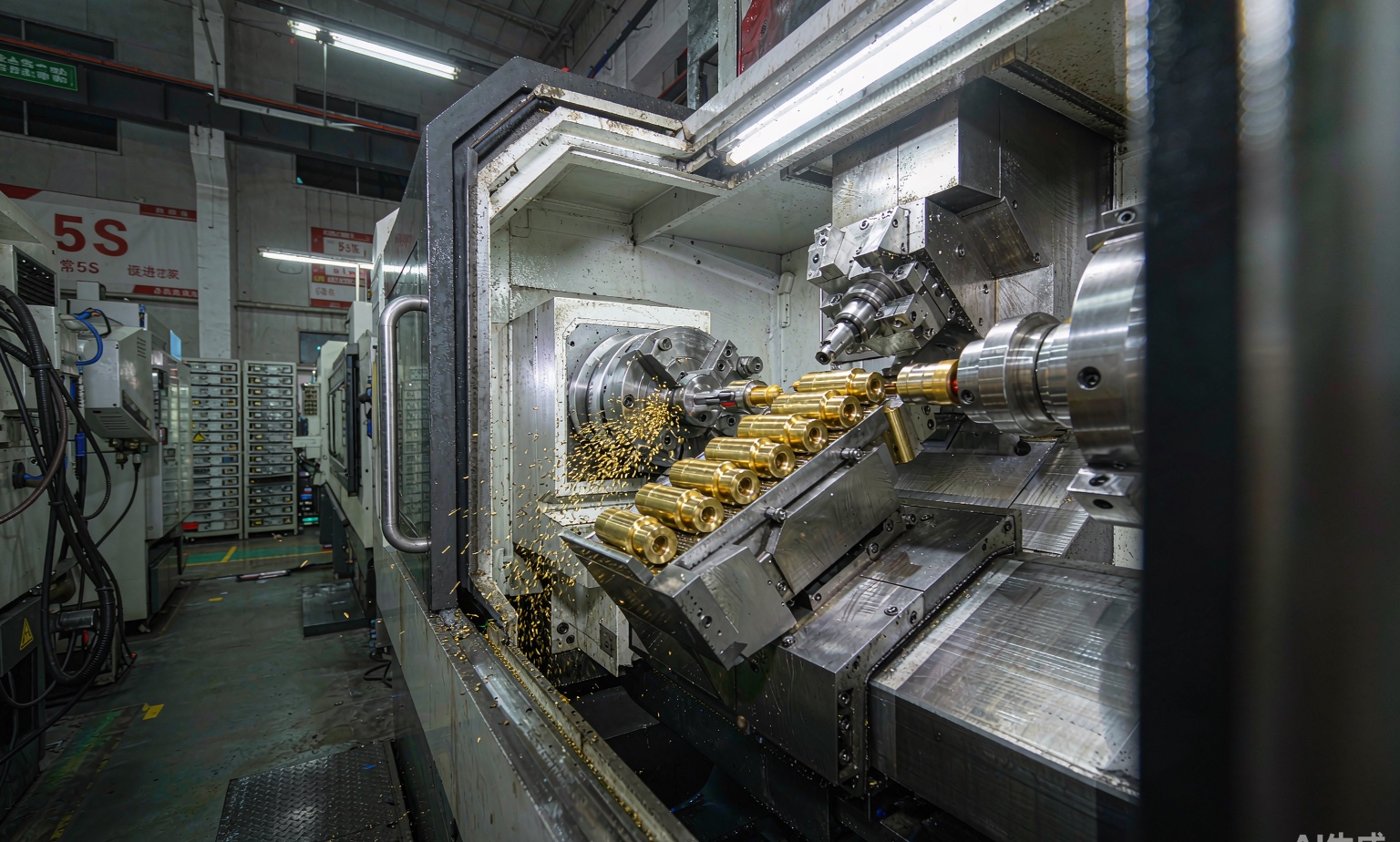
Brass and copper look almost identical on a shop floor, and both machine beautifully — yet they behave very differently in a finished part. Choosing the wrong one usually shows up as either a surprise material bill or a part that corrodes, work-hardens, or fails a conductivity spec. This guide compares the two metals exactly as we evaluate them at the turning lathe and the machining centre, so your next CNC machining brass project starts on the right alloy.
Copper is the pure element — commercially pure grades such as C11000 (electrolytic tough pitch) or C10200 (oxygen-free) sit above 99.9% Cu. Brass is an alloy of copper and zinc, and the zinc content defines its personality: C36000 free-cutting brass carries roughly 60–63% copper and the balance zinc with a dash of lead, which is what makes it the most machinable metal in common use.
That single difference cascades into everything else: strength, corrosion behaviour, cost and machinability all diverge from it.
| Property | Copper (C11000) | Brass (C36000) |
|---|---|---|
| Electrical conductivity | ~100% IACS — the benchmark | ~26–28% IACS |
| Thermal conductivity | ~390 W/m·K | ~120 W/m·K |
| Tensile strength | ~200–250 MPa (soft) | ~340–470 MPa |
| Machinability rating | ~20% (gummy, abrasive chips) | 100% — the reference standard |
| Corrosion resistance | Excellent, forms protective patina | Good, but can dezincify in chlorides |
| Relative material cost | Higher | Lower (zinc dilutes cost) |
Pick pure copper when the part's job is to move electricity or heat. Busbars, earth straps, resistance-welding electrodes, induction coils, heat-sink bases and RF components all need the conductivity that only the pure metal provides. Copper also resists biofouling and many industrial atmospheres better than brass, which is why it stays the default for plumbing and marine electrical hardware.
The machining price of that purity is real: pure copper is gummy. Chips refuse to shear cleanly, they weld to the cutting edge, and tool life drops at high speeds. The fixes we use daily are sharp uncoated carbide or PCD tooling, high lubricity coolant, and cutting parameters that keep the chip thin — all things to expect when you order CNC machining copper parts.
Brass takes roughly three-quarters of the "small precision metal part" market for good reasons. Free-cutting C36000 machines at the highest speeds of any common metal with short, clean chips that clear themselves — which is why it dominates high-volume turning of fittings, valve bodies, inserts, terminals, gears and instrument components. It polishes and plates beautifully, threads without tearing, and its lower raw-material price shows up directly in the quote.
Where brass needs a second look: electrical conductivity is only about a quarter of copper's, and in chloride-rich environments (seawater, some process fluids) it can suffer dezincification — the zinc leaches out and leaves a porous copper sponge. Arsenic-inhibited or naval brass grades solve this where the spec demands it.
For parts carrying load or fine threads, brass's higher strength matters. A brass M2 thread strips at noticeably higher torque than a pure-copper one, and thin bosses in copper deform during handling long before brass does. If your design threads into the part itself, or the feature walls are under 1 mm, start with brass and only move to copper if the electrical spec forces you. For general thread design rules, see our guide to designing internal threads for CNC machining.
A useful costing rule: on small turned parts, material and machining time are comparable contributors, so switching from copper to brass usually cuts the total price by 20–40% — cheaper stock and much faster cutting. Switching the other way, from brass to copper for conductivity, is almost always justified by function, never by fashion. If the electrical requirement is marginal, ask whether a copper-clad or bimetal design can carry the current while brass carries the structure. Our machined-part cost breakdown shows how material choice flows through to the final unit price.
We run high-volume Swiss-type and CNC turning cells dedicated to brass fittings and terminals, and separate cells with PCD tooling for oxygen-free copper busbars and heat exchanger components. Typical practice: CNC turning for round geometry with tolerances to ±0.01 mm, milling or 5-axis machining for prismatic conductive parts, and in-house conductivity and pressure testing where the drawing calls for it. See the full range of brass machining services or compare grades on the materials guide.
No — both copper and brass are non-magnetic, which is why both are used near sensors, RF coils and MRI-adjacent equipment. If a part must be non-magnetic and strong, brass or aluminium beats steel without heat treatment.
Copper welds and brazes readily. Brass is usually brazed or soldered rather than welded, because zinc vaporises in the arc and makes porous welds — design brass joints for brazing and tell us early so tolerances account for the filler.
Copper where the thermal path is critical, brass where cost and machined detail dominate. Many good designs use a copper base with brass fittings, getting the conductivity where it matters at a sane price.
Yes. Every order can ship with mill test certificates traceable to the alloy grade, and RoHS/REACH declarations for EU-bound assemblies on request.
Send us your drawing with the duty cycle and environment described — we will recommend the alloy, quote both copper and brass where the choice is close, and flag thread and plating details before you commit. Reach the team at sales@nbrjmetal.com.
Send your 2D/3D files and get a detailed quotation within 24 hours — DFM feedback, material and tolerance advice, and lead time included. Prototypes from 1 piece, no minimum order.
Request a Free Quote → WhatsApp Us
Or email jasonhardware@foxmail.com · Reply within 24 hours, Monday–Saturday
Contact: Mr Zhang
Phone: +86-18368240367
E-mail: jasonhardware@foxmail.com
Add: No.16 Laoshan Road, Beilun District, Ningbo City
LiveChatclose
 Send Email
 WhatsApp